
AI Deployments · Modular Data Center
Factory-built capacity, ready for compute.
Factory-built modules from our subsidiary BiXBiT USA. One platform, from a 50 kW edge module to a 10.8 MW campus, with up to 250 kW per rack.
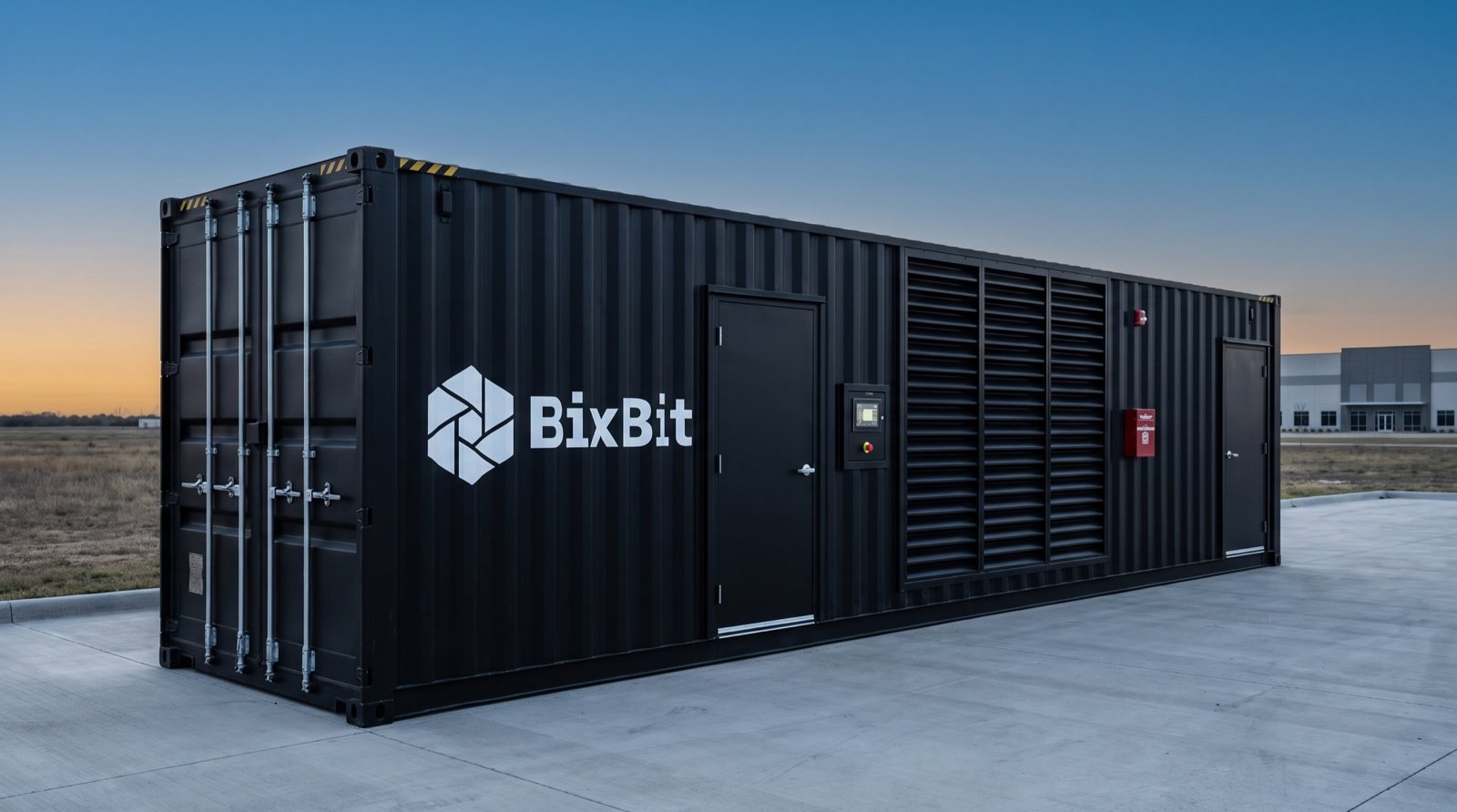
From a single module to a campus.
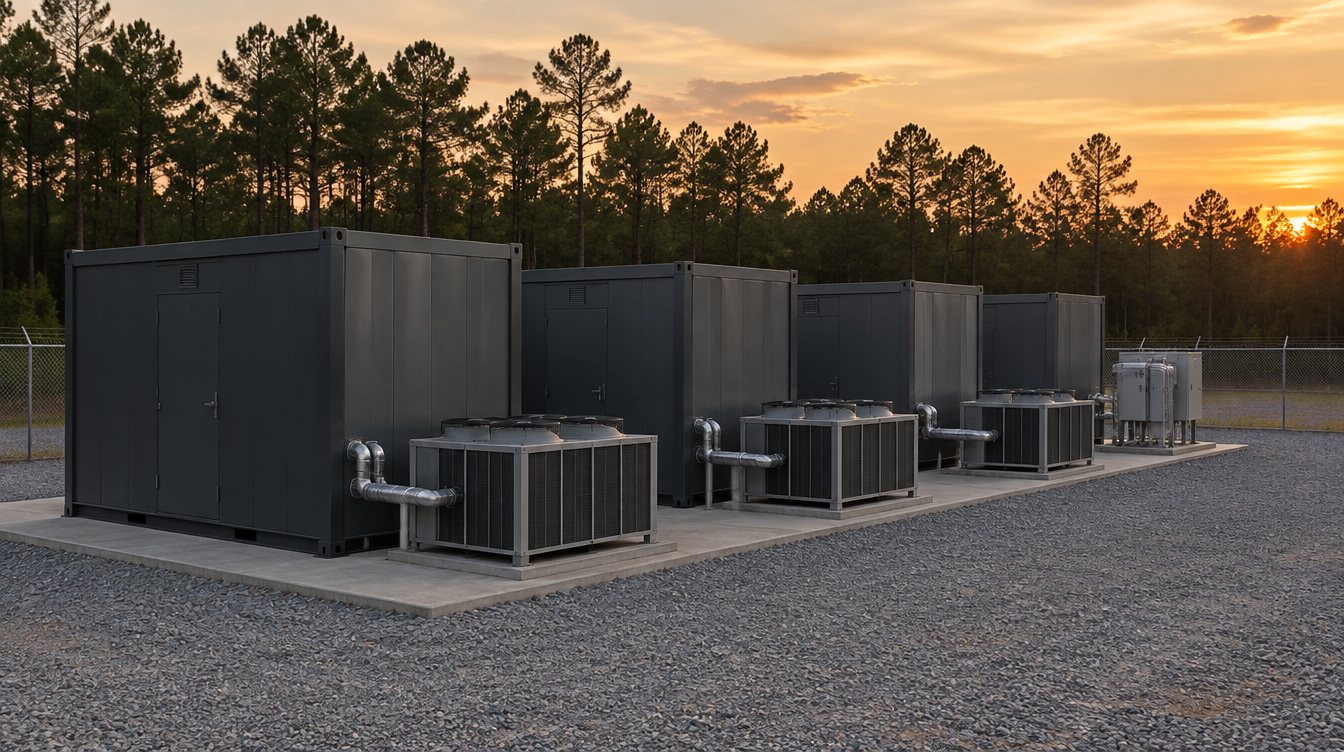
The same design scales by adding modules, so the first deployment is not a dead end. Each module is built in the factory while site work proceeds, then set on a prepared pad with its fluid coolers on the ground beside it.
Edge
A 20 ft module for edge sites, inference and small clusters.
Core
A 40 ft module with 8 liquid-cooled AI racks at up to 250 kW each.
Block
Modules grouped into a block, with 2N power distribution as standard.
Campus
Multiple blocks on one site, built out as demand grows.
Power, cooling and monitoring, integrated.
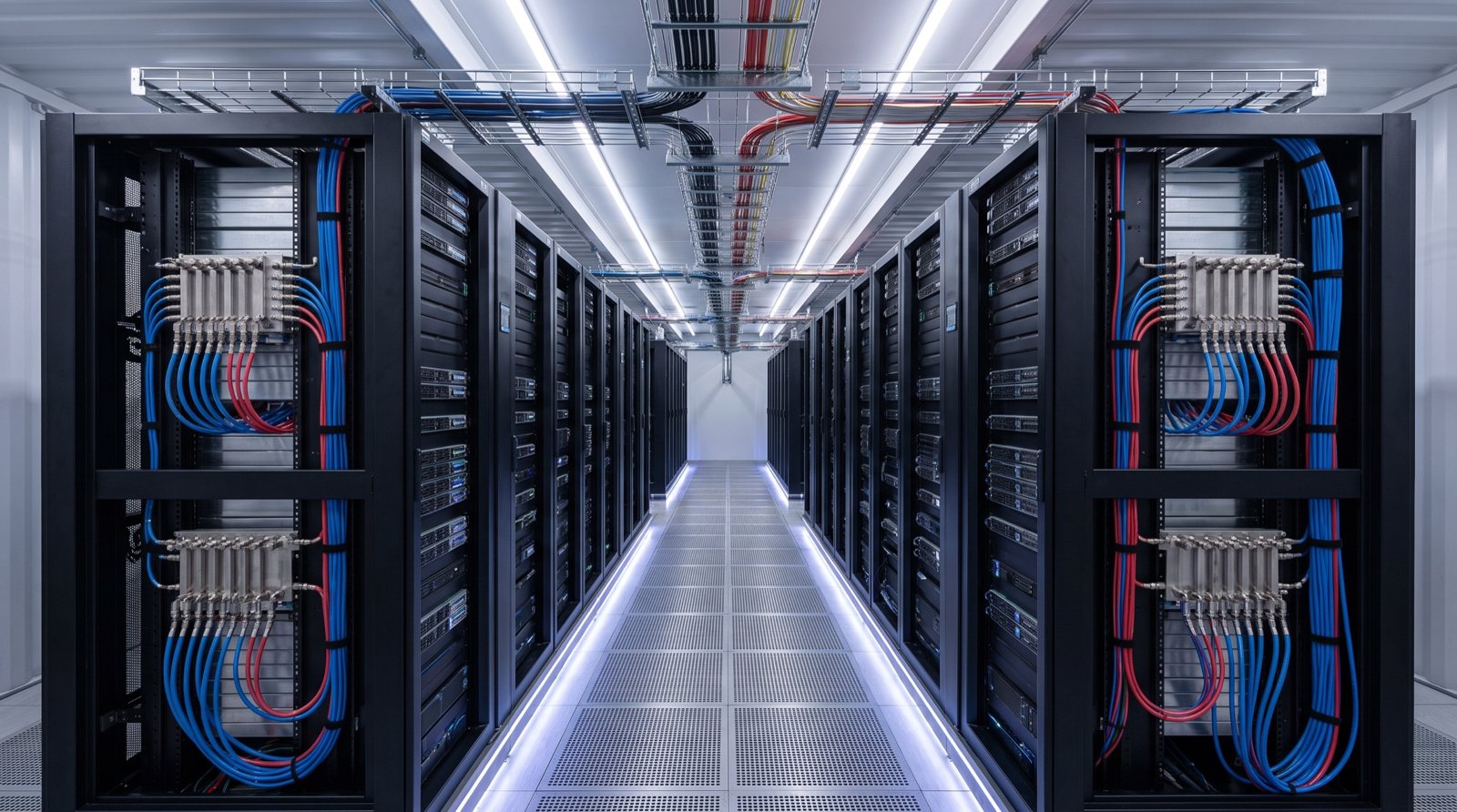
Racks, cooling, power distribution and monitoring are integrated in the factory as one unit. Liquid-cooled AI configurations are designed for a PUE of 1.10 to 1.15, with no chillers and no water-intensive cooling towers.
Power and cooling specifications.
- Input voltage
- 480 V, 3 phase
- Main bus rating
- Up to 400 A
- Redundancy
- N, N+1 or 2N
- UPS topology
- Online double conversion
- Transfer switch
- Automatic, under 10 ms
- Power monitoring
- Circuit level, Modbus and BACnet
- Generator ready
- Cam lock connections
- Cooling modality
- Air, hybrid DLC or full liquid
- Rack density
- 6 to 250 kW per rack
- CDU loop
- 2.35 MW, N+1 pumps, no chillers
- Heat rejection
- Dry or adiabatic fluid coolers, N+1
- Cooling redundancy
- N, N+1 or 2N
- Design PUE, liquid AI
- 1.10 to 1.15
- Thermal monitoring
- Temperature, flow, pressure and leak sensors on every rack
Specifications for the BiXBiT USA modular line, from our subsidiary BiXBiT USA. Configurations are set per deployment.
Cooling matched to your GPU class.
Air, hybrid direct liquid cooling or full liquid, selected for the GPU class you deploy.
| Workload | Rack density | Cooling |
|---|---|---|
| Edge and inference | 6 to 15 kW | Precision air |
| Enterprise and HCI | 15 to 40 kW | Air with containment |
| H100 and H200 clusters | 40 to 80 kW | Direct to chip liquid, about 70% liquid |
| GB200 NVL72 and GB300 | 120 to 200 kW | Cold plate liquid, about 85% liquid |
| Next generation NVL72 class | 225 kW design, 250 kW ceiling | Cold plate liquid, about 90% liquid |
Two module sizes.
- External size
- 40 x 8 x 9.5 ft
- Racks
- 8 AI racks, 48U, liquid cooled
- IT load
- Up to 2.0 MW
- Weight, loaded
- 35,000 to 45,000 lbs
- Transport
- Standard flatbed, crane lift
- External size
- 20 x 8 x 9.5 ft
- Racks
- Up to 10 racks, 42U or 48U
- IT load
- 60 to 100 kW
- Weight, loaded
- 20,000 to 28,000 lbs
- Transport
- Standard flatbed, forklift capable
Standard shipping container form factors, moved on a standard flatbed.
Built to the codes your engineers check.
ISO 668
Standard shipping container form factor
NEC 2023
National Electrical Code for all power distribution
UL 2755
Modular data center fire, electrical and structural safety
NFPA 75/76
Fire protection for IT and telecommunications equipment
IBC seismic and wind
Structural engineering for seismic zones and high wind loads
ASHRAE TC9.9
Thermal guidelines, A1 envelope
How a modular deployment goes together.
Your power availability, GPU class, redundancy level and site conditions.
The pad, utility service and connections are prepared on site while the modules are built.
Racks, cooling, power distribution and monitoring are integrated in the factory as one unit.
Each module ships on a standard flatbed, is set on the pad and connected to power and to its fluid coolers.
Site acceptance, functional and integrated testing on site, then each module is energized.
Capacity grows one module at a time, on the same pad and the same power plan.
Liquid cooling to the rack.
Questions buyers ask.
Who builds the modules?
Our subsidiary BiXBiT USA.
What redundancy can a module carry?
Power and cooling redundancy of N, N+1 or 2N, configured per deployment. Blocks of modules come with 2N power distribution as standard.
Which GPUs does it support?
From edge and inference servers to GB200 NVL72 and GB300 racks, with cooling matched to each GPU class. See the density table above.
Can we combine modules with a building?
Yes. A full campus can mix purpose-built data halls and modules on one master plan.
When is a module online?
When it is commissioned on site and your network, security and monitoring are connected, not just when it is powered on.
What do you need from us?
Send us your IT load, region, timeline and cooling approach, and we come back with a site match and a delivery plan.
Tell us what you need to power.
Power, allocated in order of commitment. Your platform, your megawatts, your timeline. We come back with a site match and a delivery schedule.